
Professional · Industrial & Manufacturing
Smart Glasses for Industrial & Manufacturing Work Assistance
Give production, maintenance and quality teams eyes-up, hands-free assistance: remote expert guidance, first-person inspection capture and step-by-step work instructions on a platform built to survive demanding environments.

Why smart glasses
Why smart glasses on the factory floor
Industrial teams already wear safety eyewear, so connected glasses add capability without adding another device to manage, charge and lose on the floor. The value is operational: faster expert reach, documented work and fewer interruptions where hands and attention matter.
- Hands-free work assistance. Operators follow digital instructions and confirm steps by voice or touch while both hands stay on the task.
- Remote expert support. A first-person camera lets specialists guide on-site technicians without travelling to the line.
- Inspection and audit capture. Photos and clips document conditions, defects and corrective actions from the operator’s point of view.
- Training and onboarding. New operators follow guided procedures overlaid on the real task.
Where it works
Use cases in industrial operations
01
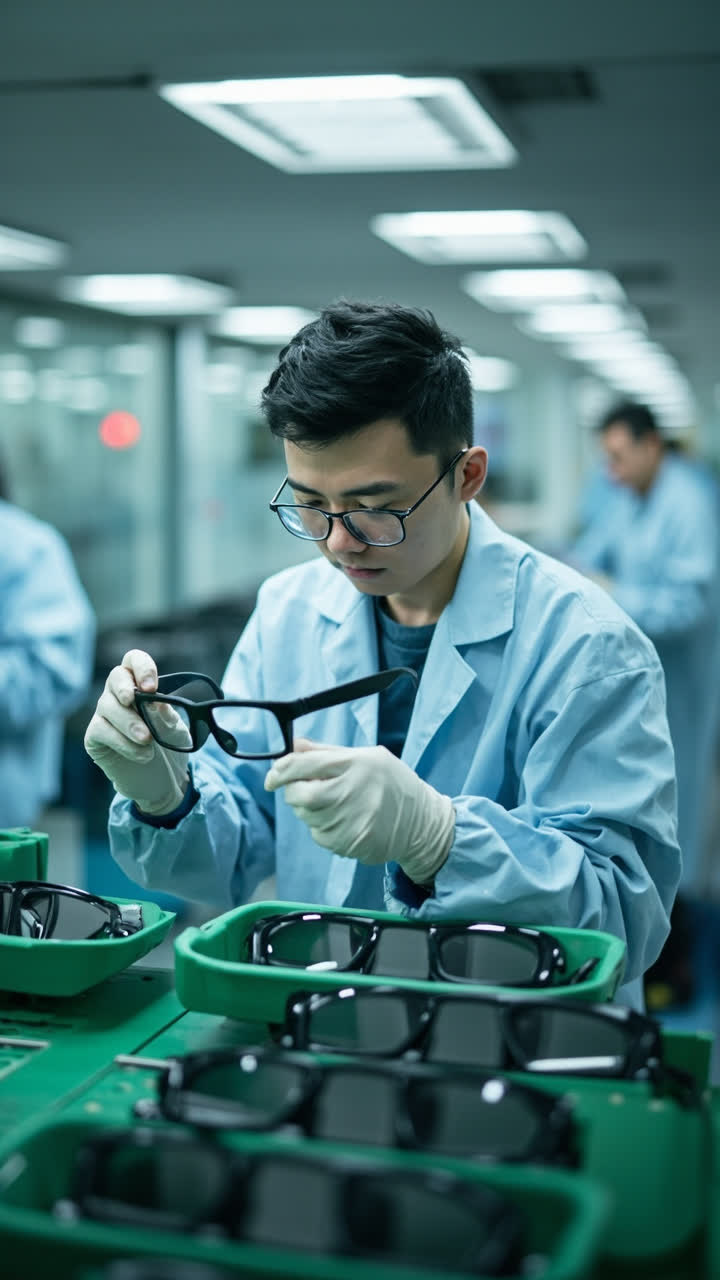
Quality inspection & documentation
Capture defects, measurements and completed work as images or clips attached to the relevant job or batch record — no phone to put down, no paperwork to misfile.
02
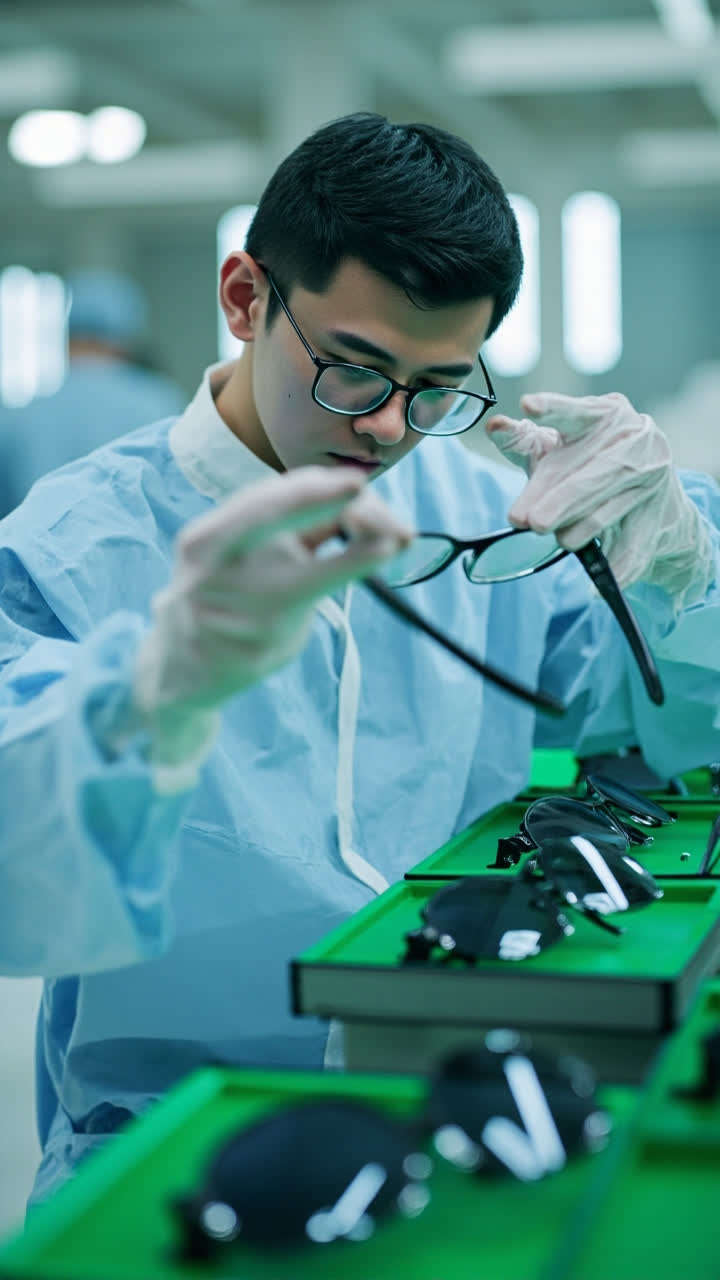
Guided assembly & work instructions
Step-by-step instructions and pick/place cues keep complex or low-frequency tasks accurate without paper or a handheld tablet occupying a hand.
03
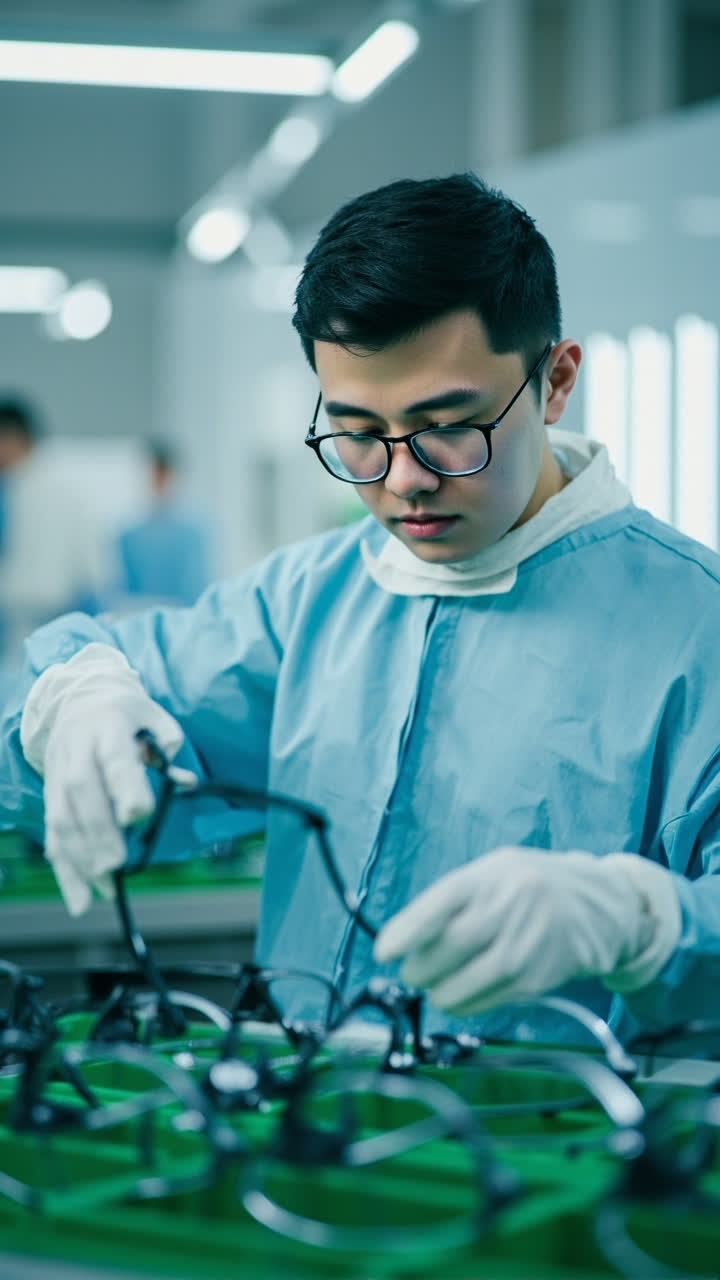
Remote expert & see-what-I-see support
Specialists guide maintenance and commissioning remotely through the first-person camera, reducing travel, downtime and expert bottlenecks.
Warehousing, picking and logistics deployments use the same hands-free interaction model for scan-aided picking and workflow prompts.
Inside CYNRIN
Engineering, production and quality, on the record
Reference platforms are built and inspected in our own production environment — see the process before you scope a program.
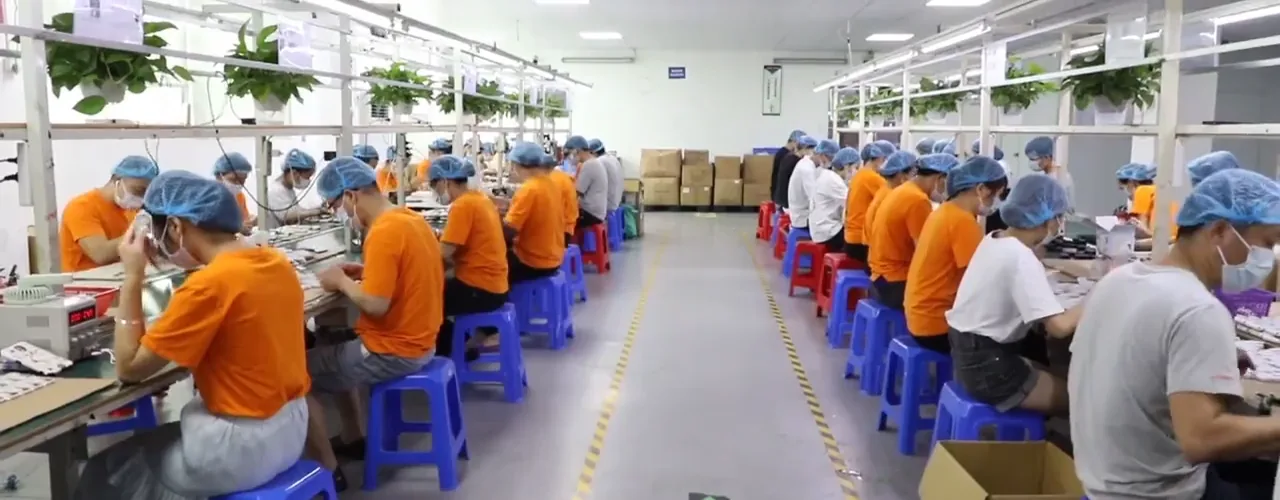
Built for programs, not prototypes
An industrial-grade program is specified, not guessed
Durability, optics, power and compliance are defined on the program datasheet and validated under our quality process — never promised generically.
Recommended platforms
Platforms for this application
Proven starting points for a private-label, OEM or ODM line.
V03-T5 AI Camera Glasses
Camera-first platform for first-person photo and video, with open-ear audio for calls. Selected when visual capture and documentation are the headline use.
View modelE13 Bluetooth Audio Glasses
Audio-first platform for hands-free calls, voice and prompts without an in-ear device. Selected for communication-led deployments.
View modelK01 Sport Glasses
Lightweight Bluetooth audio platform suited to active, value-oriented lines, with the same private-label branding and packaging options.
View modelProgram build
Building an industrial-grade program
Environment scoping
Materials, sealing and port layouts are selected for dust, moisture, oils and shift-long wear.
Safety-lens options
Optical and protective lens requirements are specified around the working environment.
Fleet & firmware
Pairing identity, enrollment and MDM-style provisioning are defined for managed deployments.
Branding & packaging
Enterprise branding, rugged cases and quick-start material via the customization service.
For ODM programs, firmware and companion software can be scoped against existing workflow or MDM systems. Private-label reference platforms provide capture and audio out of the box; integration depth is defined during engineering review.
Branding, rugged cases and quick-start material are handled through customization. Exact protection and certification levels are confirmed per program rather than claimed generically.
Buying considerations
Questions we answer before tooling
The same checklist we run through with every industrial customer before mass production.
| Consideration | Why it matters | How CYNRIN supports |
|---|---|---|
| Environment and sealing | Factory floors expose devices to dust, moisture, oils and impact; consumer-grade sealing is often insufficient. | Suitable materials, sealing and port layouts are scoped per program and validated under the quality process. |
| Comfort across a full shift | Adoption depends on weight, balance and compatibility with caps, helmets and prescription inserts. | Frame geometry and temple profiles are reviewed, including custom tooling via ODM. |
| Battery for shift patterns | Continuous capture and calls drain power faster than intermittent use; runtime must match the shift profile. | Power budgets are tuned per feature configuration and stated on the program datasheet, not in marketing copy. |
| Deployment and fleet needs | Managed fleets need provisioning, identity and, often, MDM-style administration. | Firmware, pairing identity and enrollment behavior are defined during ODM scoping. |
| Target-market compliance | Enterprise buyers request compliance evidence before procurement. | Certification work is aligned to destination markets and confirmed per program. |
FAQ
Frequently asked questions
Are these safety-certified smart safety glasses?
Protection and certification levels depend on the target standard and the program configuration. We scope suitable materials and lens options per use case and confirm specific ratings per program rather than generically. Discuss your standard early at request a quote.
Can the glasses integrate with our MES or work-instruction software?
For ODM programs, firmware and companion software can be scoped against existing systems. Private-label reference platforms provide capture and audio; integration depth is defined during engineering review.
What is the MOQ for an industrial deployment?
Branded reference platforms start at lower tiers; custom sealing, tooling or software work is structured around larger commitments. See the MOQ page; figures are confirmed per program.
Can we evaluate units before a fleet rollout?
Yes. Evaluation samples of reference platforms are available for operational trials; see the samples process.
Scope an industrial smart-glasses program
Tell us the working environment, tasks, software context and target volumes. Our engineering team will respond with a platform recommendation, indicative MOQ and sampling path.