01
Brand-owned compliance
CE-RED, FCC, RoHS and REACH certificates were filed in the customer’s name, leaving the asset with the brand rather than the factory.

Three anonymized customer stories — an audio-glasses private label in Europe, a camera-glasses ODM for the US creator economy, and a co-branded cycling program in the Nordics. Client names, product names and identifying details are withheld under NDA; the program facts are real.
B2B buyers need facts about scope, process and outcomes, while brands reasonably forbid disclosure of their identity. The cases below therefore name the market, channel and product architecture, and publish concrete program parameters — but never the company, SKU name or logo.
Each program was executed under a standard mutual NDA with Shenzhen Kingring Technology Co., Ltd. (CYNRIN). Figures shown — order quantities, timelines, certification scope and reorder volumes — are drawn from project records and presented in rounded form. Customers evaluating a similar program can request reference-style technical discussions under their own NDA; the patterns behind these programs are also described on the OEM manufacturing and ODM design pages, with commercial terms on MOQ and lead times.

A mid-size European consumer-electronics brand wanted an open-ear audio glasses line for electronics retail and its own web store, but had no wearable-electronics engineering team. The brief called for a mature platform with a European-language voice configuration, its own retail packaging and a launch window fixed to a buying-group presentation 12 weeks out.
The product had to pass the CE-RED test regime, arrive with localized quick-start guides, and survive a buyer audit before the first order — while starting from a 500-unit pilot that did not justify custom tooling.
A catalog-platform private label: logo marking, pantone-matched temple color, custom retail box and a brand-scoped firmware identity (pairing name and language set). CE-RED, RoHS and REACH files were issued in the brand name from PVT-identical samples, with the TCF handed over before the audit date.
“The factory handled certification in our name and the buyer audit passed on the first submission. Reorders now run on a standing forecast without renegotiating anything.”

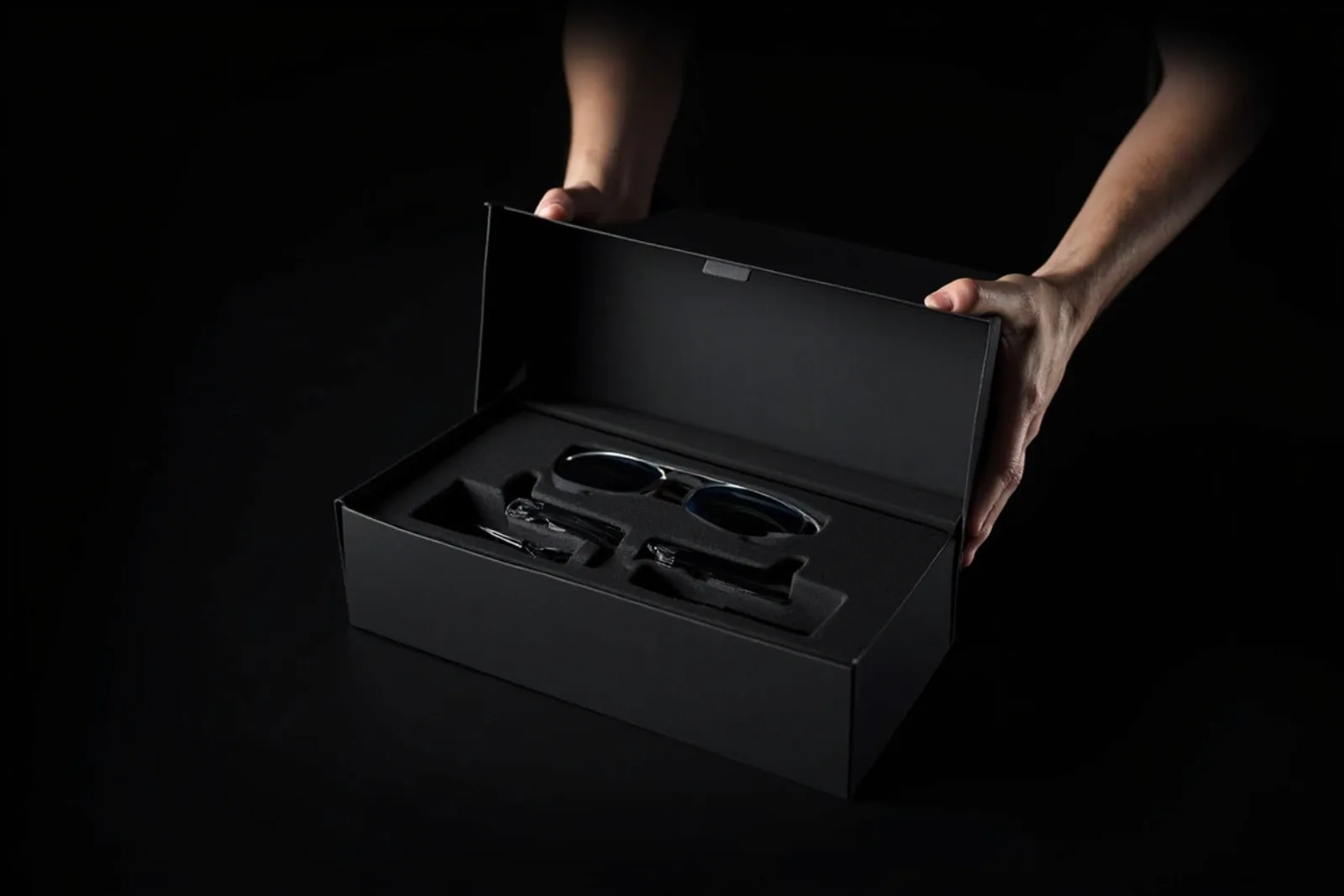
A venture-backed creator-economy brand in the US designed its launch product around point-of-view capture for short-video creators. The program required more than labeling: tuned camera behavior, a custom frame colorway, distinctive unboxing and an Amazon US listing from day one.
Camera glasses combine three approval tracks — FCC for the radio, battery-transport files for air freight, and Amazon’s own compliance-document gate. The brand also needed packaging that survived FBA carton handling and survived review on social video.
A scoped ODM on a camera-capable reference platform: ISP tuning for creator-style contrast, custom temple ID without new lens tooling, a designed sleeve-and-tray box validated by packaging drop tests, and an FCC grant filed in the brand name with the complete FBA document set — reports, DoC, UN38.3 summary and label files.
“Engineering answered the lab directly so our small team never became the middleman. The compliance package uploaded to Amazon without a single rejection cycle.”


A Nordic cycling apparel brand wanted eyewear that matched its team kits and worked on group rides: open-ear audio for calls and navigation, polarized lenses for bright-road glare, and a frame finish that survived sweat and rain. The commercial frame was a 3,000-unit seasonal order sold through bike retailers and club channels.
A full custom development was uneconomic for a single season, but the catalog color range did not match the brand’s two team-color palettes, and the retail partners required polarized, UV400-verified lenses.
A K01-based platform customization: two pantone-matched frame colors with team logo marking, polarized lens runs verified on the optical bench (transmittance, polarization axis, UV400), bilingual Nordic quick-start cards and season-specific outer cartons for direct delivery to the distributor.
“They treated a seasonal customization like a flagship program — lens data, color masters and carton labels were all delivered before the production deposit was even due.”
Different markets, channels and product architectures — the same operating model made each one land.
CE-RED, FCC, RoHS and REACH certificates were filed in the customer’s name, leaving the asset with the brand rather than the factory.
None of the three paid for a ground-up development. Each adopted a proven reference platform and customized only where the market would pay for it.
Golden samples, PVT-identical certification units and documented gates meant every launch hit its window without retesting surprises.
Retail boxes and FBA cartons were treated as part of the product — designed, drop-tested and documented, not sourced at the last minute.
Material buffering and controlled BOMs turned the first purchase order into a standing program with 15–40 day mass-production cycles.
Customer identities remain protected years after shipment — including on this page, where the outcomes speak for themselves.
See how these patterns map to consumer-electronics brands, sports & cycling brands and distributors & retailers.
Branded production on a proven platform — the Case A and Case C route.
Explore02Co-developed ID, camera tuning and custom packaging — the Case B route.
Explore03The fastest path from catalog platform to a branded, retail-ready line.
Explore04How certificates end up in your brand name, market by market.
ExploreShare your market, channel, target volume and launch window. Engineering returns an itemized quotation, MOQ and stage-gated timeline within five working days — under NDA on request.