
Core Technology · Voice AI
Real-Time Translation
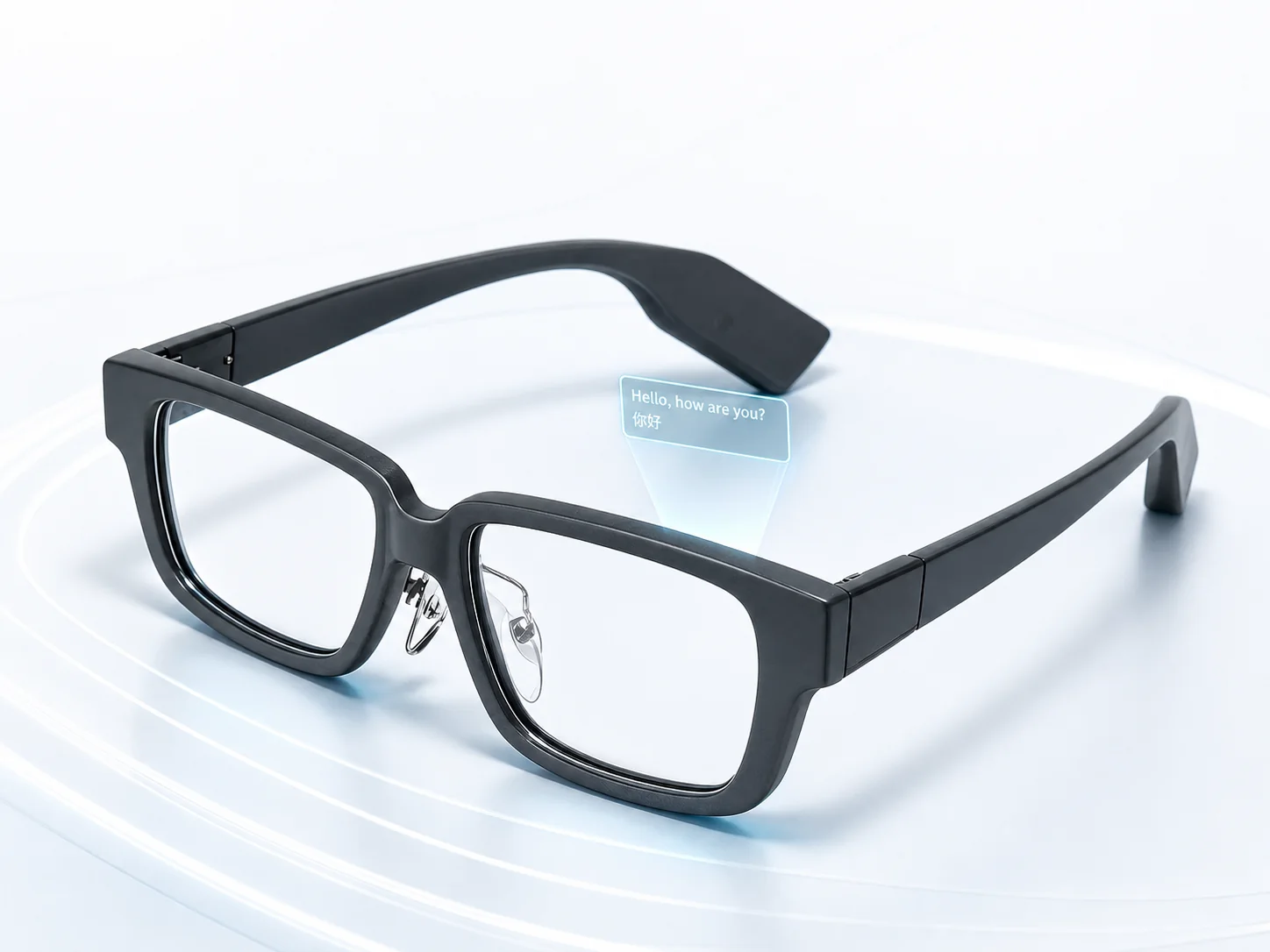
Translation-enabled glasses help users follow and join conversations across languages, using open-ear audio and paired-phone processing. The eyewear captures speech and delivers prompts; translation services and language packs run through the companion experience.
Overview
Multilingual voice translation
Cross-language conversation is one of the clearest use cases for smart glasses: speech is captured from the face, processed by a translation service on the paired phone, and the result is delivered as open-ear audio — or as an on-screen prompt on display-enabled configurations.
- Conversation mode. Near-speech capture and quick turn-taking support travel, retail and service conversations.
- Service-dependent intelligence. Recognition and translation quality come from partner engines and language packs, which can be updated without new hardware.
- Open-ear delivery. Translations play through open-ear speakers so users stay aware of their surroundings.
Supported language pairs, online/offline behavior and latency are service- and market-dependent and are confirmed per program.

How it works
The end-to-end chain
From input to user experience, engineered as one system rather than stacked modules.
Speech capture & recognition
Microphones capture speech and the companion service converts it to text in the source language.
Translation engine
A partner translation service maps the text into the target language, with language packs updated through the app.
Delivery
Translated speech plays through open-ear audio or appears on display-equipped platforms.
Inside the technology
How the pieces fit together
A structural view of the capability. Configuration-dependent figures are confirmed per program rather than published as generic headline numbers.
Applications
Where this technology is used
Real use cases where eyes-up, hands-free smart eyewear changes how people work and move.
Platforms
Proven starting points for your line
Platform configurations that ship this capability for OEM, ODM and private-label programs.
FAQ
Real-Time Translation FAQ
How many languages are supported?
Does translation need an internet connection?
Build this technology into your eyewear line
Tell us your target market and platform requirements. Engineering will reply with a configuration proposal, customization scope and sampling path.